 India
India







How Often Does a Lift Need To Be Serviced?
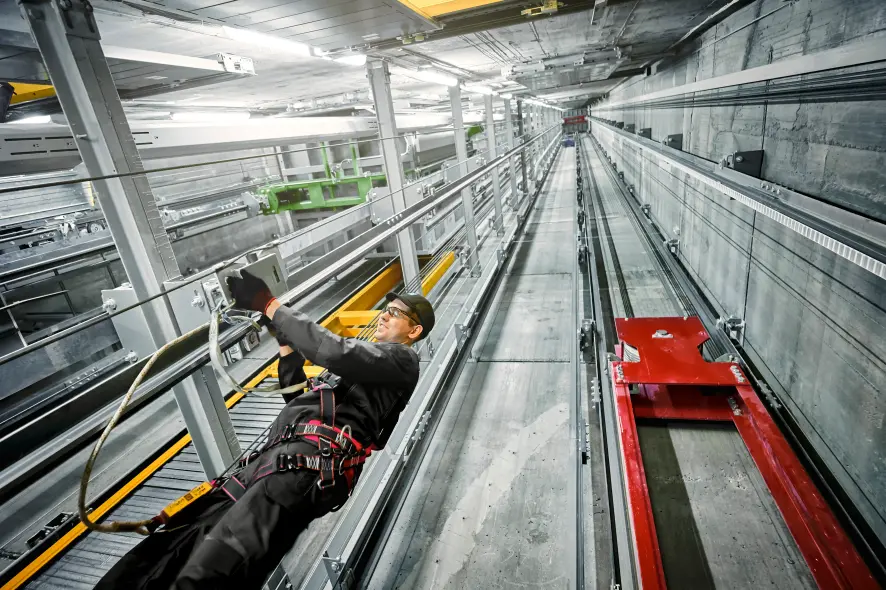
Regular and adequate lift maintenance is crucial for ensuring safe, smooth operations, and extending the lifespan of elevators. Based on research published in the Journal of Building Engineering, besides the age of a lift, inadequate safety features and surpassing the maximum recommended service life of components are the primary reasons elevators require costly lift repairs and lift modernization. Conversely, regular inspections and appropriate maintenance enable building owners in India to detect potential issues early, preventing significant disruptions to lift operations.
Several factors determine how frequently a lift should be serviced. Here are some key considerations:
Original manufacturers specify maintenance intervals for critical components like elevator brakes. Adhering to these guidelines is essential to prevent malfunctions, similar to the maintenance schedules recommended for automobiles.
Maintenance intervals should correlate closely with the frequency of lift rides. Elevators used more frequently exhibit signs of wear sooner, necessitating shorter maintenance intervals to maintain optimal performance. Elevators in commercial or public buildings in eIndia typically require more frequent maintenance (e.g., monthly), whereas residential elevators serving fewer than 6,000 trips per month and installed in buildings with up to six floors may suffice with quarterly maintenance optimized maintenance schedule (in line with the states’ lift rules / act and OEMs defined frequency and task codes). It's important to note that these are general guidelines; the appropriate service frequency should always be determined by a qualified lift service technician on a case-by-case basis.
The "bathtub principle" applies here, suggesting that complex systems like elevators require more frequent maintenance at the beginning and end of their lifecycle. Early after installation, minor faults may still occur, while older lifts are more prone to problems after years of heavy use. The middle years, between installation and end-of-life, typically experience fewer disruptions.
Elevators in industrial buildings transporting heavy loads or serving tall buildings have different maintenance needs compared to those in residential buildings in India.
Regular lift maintenance offers numerous advantages, ensuring maximum user safety and reducing costly service disruptions while extending the lift's lifespan. For more information on how we can assist you, contact our service teams across India.
Also check out our related blog posts: How Much Electricity Does a Lift Use? and How Often Does an Escalator Need To Be Serviced?.
Q: Do brand new lifts require frequent maintenance?
A: Yes. According to the "bathtub principle" of reliability, complex systems often experience minor faults shortly after installation (early failure phase). Frequent maintenance during this period is crucial to identify and rectify these initial issues to ensure long-term stability.
Q: Is the maintenance schedule legally binding in India?
A: Yes. Service frequency is not just a recommendation; it must align with the specific "lift rules and acts" of your respective state in India, as well as the Original Equipment Manufacturer's (OEM) defined task codes to ensure full legal compliance.
Q: What is the primary cause of expensive lift repairs?
A: Beyond just the age of the equipment, costly repairs and premature modernization are most often caused by inadequate safety features and a failure to replace components before they exceed their service life.
Q: Under what specific conditions can a residential lift opt for quarterly maintenance?
A: Quarterly maintenance is generally acceptable only for low-rise residential buildings (up to six floors) where the lift performs fewer than 6,000 trips per month, provided this frequency complies with local state acts.
Q: What are OEM "task codes" and why do they matter?
A: OEM task codes are specific maintenance protocols defined by the manufacturer. Adhering to these codes, alongside state lift acts, is critical for creating an "optimized maintenance schedule" that covers all necessary safety checks for that specific lift model.
Q: Can poor maintenance accelerate the need for full modernization?
A: Yes. Research indicates that surpassing the recommended service life of components without replacement is a primary reason elevators require "lift modernization" earlier than expected. Regular care prevents this premature aging.
Q: How does maintenance help with insufficient safety features?
A: Insufficient safety features are a leading cause of costly repairs. Regular inspections allow technicians to identify if a lift's safety mechanisms are outdated or insufficient, allowing for timely upgrades before a major incident occurs.


TL;DR
How often should a commercial lift be serviced in India?
Elevators in commercial or public buildings typically require monthly maintenance due to higher traffic volumes. Residential lifts with lower usage (under 6,000 trips/month) may only need quarterly servicing, provided they align with state regulations and OEM guidelines.
Why is "preventative" maintenance better than waiting for a breakdown?
Surpassing the recommended service life of components is a leading cause of expensive repairs. Regular inspections allow building owners to detect minor faults early, ensuring maximum passenger safety and preventing significant operational disruptions.
Do usage characteristics change the maintenance plan?
Yes. Lifts serving high-rise buildings or those in industrial settings transporting heavy loads have significantly different maintenance requirements compared to standard low-rise residential elevators.
What technical factors determine the service interval?
Maintenance frequency is primarily influenced by the manufacturer’s recommendations for critical parts like brakes, the total number of rides, and the age of the lift. Heavier loads and usage in industrial or tall buildings also significantly change maintenance needs.